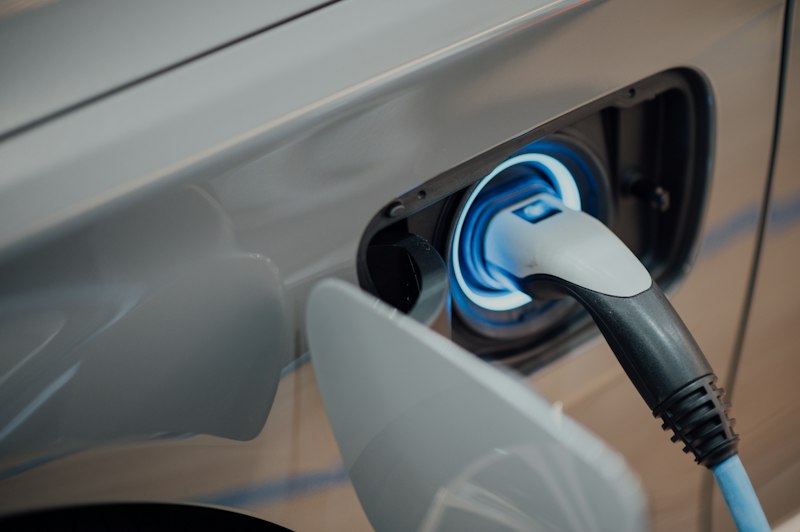
By mid-2024, China controlled 80% of global EV battery production capacity, a dominance that has profound implications for the global energy transition. For UK students considering careers in sustainability, energy, or international business, understanding China's battery ecosystem is essential.
The Scale of Dominance
China's battery dominance extends across the entire supply chain:
- Raw Materials: China controls 70% of global lithium refining, 85% of cobalt refining, and 90% of rare earth processing.
- Cell Manufacturing: Chinese companies like CATL, BYD, and CALB produce more batteries than all Western manufacturers combined.
- Innovation: China leads in next-generation battery technologies, including sodium-ion batteries, solid-state batteries, and ultra-fast charging systems.
- Cost Efficiency: Chinese battery costs have fallen to $80/kWh, making EVs price-competitive with internal combustion vehicles.
CATL: The Battery Giant
Contemporary Amperex Technology Co. Limited (CATL) has become the world's largest EV battery manufacturer, supplying Tesla, BMW, Volkswagen, and virtually every major automaker. Founded in 2011, CATL now commands over 35% of global market share.
CATL's success stems from relentless innovation. The company's Qilin Battery, announced in 2022, achieves 255 Wh/kg energy density—13% higher than Tesla's 4680 cells. CATL's sodium-ion batteries, launched in 2023, promise to eliminate dependence on lithium for entry-level EVs.
For UK students, CATL represents a case study in how Chinese companies can achieve global dominance through a combination of government support, massive scale, and continuous innovation.
BYD's Vertical Integration
BYD (Build Your Dreams) has taken a different approach: vertical integration. Unlike Western automakers that outsource battery production, BYD manufactures its own batteries, motors, and semiconductors. This strategy has made BYD the world's largest EV manufacturer, surpassing Tesla in 2023.
BYD's Blade Battery, using lithium iron phosphate (LFP) chemistry, offers superior safety and longevity at lower cost. The company's ability to control its entire supply chain has proven crucial during global supply chain disruptions.
Implications for the UK
China's battery dominance creates strategic challenges for the UK:
Energy Security: The UK's transition to electric vehicles depends on Chinese battery supply chains. This dependence raises concerns about economic security and geopolitical leverage.
Industrial Strategy: The UK government has invested £1 billion in battery manufacturing, but British production capacity remains a fraction of China's. Building a competitive UK battery industry requires understanding Chinese manufacturing practices and supply chain strategies.
Climate Goals: Achieving net-zero emissions by 2050 requires massive EV adoption, which in turn requires Chinese batteries. This creates a tension between climate ambitions and strategic autonomy.
Career Opportunities
China's battery dominance creates diverse career opportunities for UK graduates:
- Supply Chain Management: Companies need professionals who understand Chinese battery supply chains and can navigate geopolitical risks.
- Technology Transfer: UK battery startups seek talent that can learn from Chinese innovations while developing homegrown capabilities.
- Policy Advisory: Government and think tanks need experts who can analyze China's battery strategy and recommend UK responses.
- Investment Analysis: Financial institutions require analysts who understand the economics and geopolitics of the battery industry.
Next-Generation Technologies
China is not resting on its current dominance. Chinese companies are investing heavily in next-generation battery technologies:
Solid-State Batteries: Chinese startups like WeLion and Qing Tao are racing to commercialize solid-state batteries, which promise double the energy density of current lithium-ion batteries.
Sodium-Ion Batteries: CATL's sodium-ion batteries could eliminate lithium dependence for entry-level EVs, further cementing China's cost advantage.
Battery Recycling: Chinese companies are building massive battery recycling facilities, creating a circular economy that reduces dependence on new raw materials.
The Path Forward
For UK students, understanding China's battery ecosystem is not just about technology—it's about understanding the future of energy, transportation, and geopolitics. The transition to electric vehicles will define the 21st century economy, and China is positioned at its center.
Programs like NEXUS CHINA offer UK students the opportunity to visit Chinese battery factories, meet with industry leaders, and understand the strategies that have made China the world's battery powerhouse.
Experience China's Battery Revolution
NEXUS CHINA's Sustainability & Green Tech program includes exclusive visits to CATL, BYD, and other leading battery manufacturers. See the future of energy firsthand.
Explore Programs